The Counter Collection Calculation: Testing Will-Call Against Delivered Trade Orders

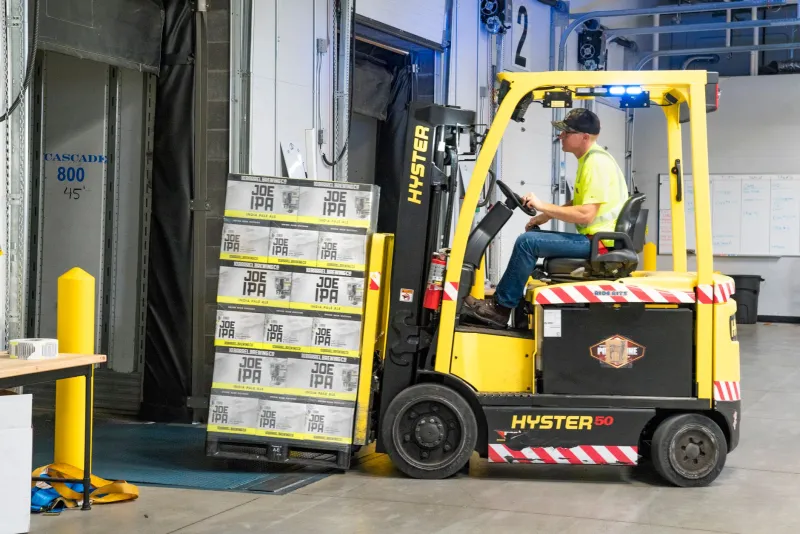
Photo: Mark Smiles, CC BY-SA 2.0, via Wikimedia Commons
The saving on the invoice is not the saving to the business
A trade counter collection, often described as will-call, has an obvious appeal. The carriage charge disappears from the invoice, the order is available sooner than a scheduled delivery might allow, and someone in the business can see the goods before they are signed for. For a buyer under pressure to reduce supply costs in 2026, that looks like a clean and immediate saving.
The difficulty is that the invoice line is only one part of the transaction. Collection moves a set of costs from the supplier to the buyer, but it does not remove them. Staff time, vehicle use, waiting at the counter, loading, damage risk and the work that does not get done while someone is away from site all remain part of the real cost. The question is not whether collection is cheaper on paper. It is whether it is cheaper once the whole trip is counted.
Staff time: the hour is rarely spare
The first mistake is to treat the person collecting the order as free capacity. In a small trade business, the person sent to the counter is often the same person who would otherwise be pricing a job, checking stock, answering a customer or supervising a load. Their time has a cost even when no overtime is paid.
A practical approach is to use an internal charge-out rate rather than a basic hourly wage. That rate should reflect employer costs, supervision and the value of the work displaced. If two hours are lost and the internal rate is £24 per hour, the collection has already consumed £48 before the vehicle has moved. Against a £45 delivery charge, the apparent saving has gone.
There is also the question of who can be sent. A collection involving pallets, long lengths of material or heavy boxes may require two people, particularly where the supplier has no loading assistance. Sending a single member of staff to collect an order that needs a two-person lift is not a saving; it is a handling risk.
The vehicle does not travel for free
A van trip is rarely just fuel. The cost per mile should include fuel, insurance, servicing, tyres, depreciation and the fixed costs of keeping the vehicle available. Many businesses use a simple mileage rate for internal charging, but the figure should be realistic and applied consistently.
There are also local charges. Clean air zones, congestion charging and parking restrictions can turn a short collection into a more expensive journey. A supplier located just outside a city boundary may still sit within a zone that applies to the vehicle being used. The route should be checked before the trip, not after a penalty notice arrives.
Distance alone can mislead. A ten-mile trip through traffic is not the same as a ten-mile trip on a clear rural road. The relevant figure is the time the vehicle and driver are unavailable, not simply the odometer reading.
Loading bays, waiting and damage
Trade counters are not always quick. A collection slot may be held, but queues form, paperwork is checked and loading can take longer than expected. If the supplier is handling several customers at once, a fifteen-minute wait can become forty-five. That waiting time belongs in the calculation.
Damage risk also shifts. When a supplier delivers, the delivery note and the condition of the goods can be checked at the point of receipt. When the buyer collects, the goods are often loaded by the buyer or with limited assistance, secured in the vehicle and transported without the supplier’s delivery insurance in play. Straps, corner protection and load restraint matter. A damaged sheet of material or a cracked panel can wipe out the carriage saving very quickly.
Buyers should also consider the return trip. If the order is wrong, short or damaged, collection may mean a second journey. A delivered order can still be corrected, but the process is usually handled through the supplier’s transport arrangement rather than another staff member leaving site.
The work that waits
The least visible cost is the work not done. A collection that takes half a day can delay a quote, hold up a customer job or leave a yard without supervision. In a busy period, the operational cost of absence can be greater than the direct cost of delivery.
This is why collection should not be judged solely by the carriage charge. It should be judged against the work that would have been completed in the same period. If the person collecting the order is the only person able to carry out a particular task, the true cost of the trip is higher than the mileage and wage figures suggest.
A practical checklist before you collect
Before choosing will-call, UK trade buyers should confirm the following:
- The exact collection address, opening hours and any booking requirement.
- Whether the supplier will load the vehicle or whether the buyer must provide labour.
- The vehicle type required, including height, weight and tail-lift needs.
- The expected waiting time and whether a collection slot is guaranteed.
- The condition checks to be made before leaving the counter.
- The load restraint and weather protection needed for the journey.
- The staff time involved, including travel, loading and return.
- The internal vehicle charge for the round trip.
- The cost of any work displaced by the collection.
- The likelihood of a second trip if the order is incomplete or incorrect.
When delivery is the cheaper option
Delivery is often the better choice when the order is bulky, heavy, fragile or required in a narrow time window. It is also the better choice when the collection would remove a key person from site during a busy period, or when the supplier’s loading arrangements are uncertain.
A delivered order also keeps the condition check at the point of receipt. The buyer can inspect the goods on arrival, record any damage and avoid transporting material without suitable equipment. For many trade accounts, that alone justifies the carriage charge.
When collection makes sense
Collection can still be rational. It may suit a small, high-value order that is needed urgently and can be collected without disrupting work. It may also suit a buyer with a vehicle already travelling in the same direction, provided the detour is genuinely minor and the loading arrangements are clear.
The test is not whether collection is possible. It is whether the full trip is cheaper than the delivered alternative after staff time, vehicle use, waiting, damage risk and missed work are counted. Where the figures are close, delivery usually carries less operational risk. Where collection is chosen, it should be a deliberate decision with the real costs recorded, not an assumed saving on the carriage line.