Before the Credit Note: Running a Tighter Returns Process on UK Trade Accounts

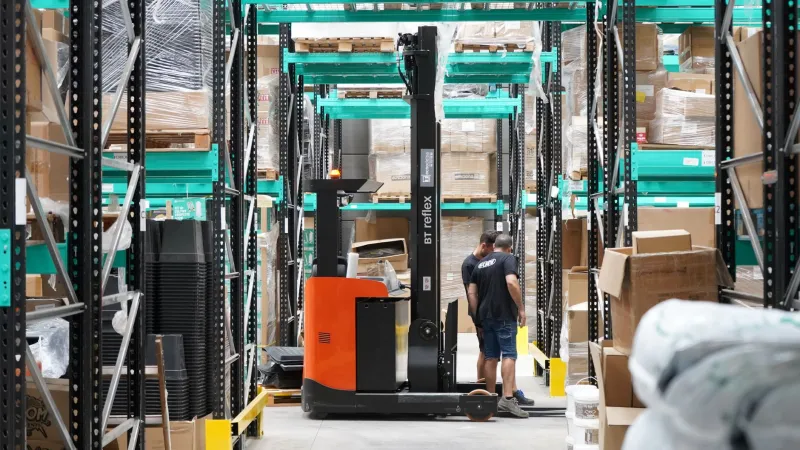
Photo: U.S. Army 405TH-AFSB by Cameron Porter, Public domain, via Wikimedia Commons
Returns on a trade account rarely fail because the supplier refuses them. They fail because the paperwork, the packaging and the pallet sit in the yard for three weeks while everyone assumes somebody else is dealing with it. By the time the credit note is chased, the supplier's window has closed, the item is no longer in a resaleable condition, or the restocking fee has quietly eaten the value of the return. For UK trade buyers in 2026, returns discipline is a cash-flow issue and a yard-space issue. It is not a customer-service afterthought.
The cost of an unmanaged returns pile
A returns area that is allowed to grow becomes a second, badly run warehouse. Items are mixed across suppliers, original cartons are separated from their contents, and labels are lost. The finance team cannot reconcile the credit note because the original invoice reference is missing. The yard team cannot move because the returns pallet is parked in the only free bay.
The visible cost is the value of the goods. The less visible cost is the space, the handling time and the management attention. A single pallet of unidentified returns can occupy a bay for a month and still produce no credit. That is dead stock with extra steps.
Log the RMA before the item moves
The return merchandise authorisation, or RMA, should be recorded before anything is wrapped, labelled or collected. A shared returns log is more useful than a folder of emails. At minimum, record the supplier, account number, original order or invoice reference, RMA number, date raised, expiry date, reason code, quantity, unit value, expected credit value, restocking fee, return carriage cost and collection reference.
Give each return an owner. A name against the line is better than a department. If the supplier issues an RMA by email, copy the key details into the log on the same day. Do not rely on the inbox search later.
Photograph the goods before collection. A photograph of the packed pallet, the label and the RMA paperwork takes seconds and settles most disputes about condition or quantity.
Read the restocking fee and the credit terms
Restocking fees are not uniform. Some suppliers charge a percentage of the invoice value, some charge a fixed amount per line, and some apply a minimum charge that makes small returns uneconomic. Return carriage may be deducted from the credit. Special-order items may be non-returnable even if the supplier's general returns policy looks generous.
Credit-note terms matter as much as the credit value. A credit note applied to the next invoice is not the same as a cash refund. If the account is quiet, the credit may sit unused. Check whether the supplier nets the credit against outstanding invoices automatically or whether it needs to be requested.
Reconcile credits monthly. A credit note that is issued but never applied is a paper asset, not cash. Match the credit note to the original invoice, the RMA and the returns log. If the value is short, query it while the paperwork is still fresh.
Packaging is part of the asset
Original packaging is not clutter. It is the difference between a return that is accepted at full credit and one that is rejected or downgraded. Keep original cartons, inner packing, pallet wrap and labels with the goods. Do not write on the outer carton unless the supplier instructs it. Do not use the returns pallet as temporary storage for unrelated stock.
Keep returns dry and segregated. A returns pallet left in a damp corner or against a wall can lose value quickly. If the item is heavy or fragile, wrap and strap it as though it is going back on a customer's vehicle, because it is.
Set an internal deadline, not a supplier deadline
Supplier return windows are often expressed in days from delivery or invoice. By the time the goods are identified, authorised and collected, the window can be close to closing. Set an internal deadline five working days before the supplier deadline. That buffer covers collection delays, missing paperwork and the discovery that a tail-lift was not booked.
Put the internal deadline in the same calendar as the supplier deadline. Assign an escalation contact for returns that approach the buffer. A weekly review of open RMAs is more effective than a monthly clear-out, because the monthly clear-out happens after the window has closed.
A simple weekly routine
A short weekly routine keeps returns from becoming a yard problem. Review the open RMA log every Monday. Label and segregate new returns. Check expiry dates for the coming fortnight. Chase collections that have not been booked. Reconcile credit notes received in the previous week. Report the value of open returns and the value of credits outstanding.
The routine does not need software. A shared spreadsheet and a named owner will do. What it needs is a rule that nothing enters the returns area without an RMA line, and nothing leaves the returns area without a collection reference.
Returns discipline is unglamorous, but it protects two things that trade buyers cannot afford to waste: cash and space. A tighter process does not make returns disappear. It stops them from becoming dead stock.