Access Before Price: What to Confirm Before a Trade Delivery Reaches Your Gate
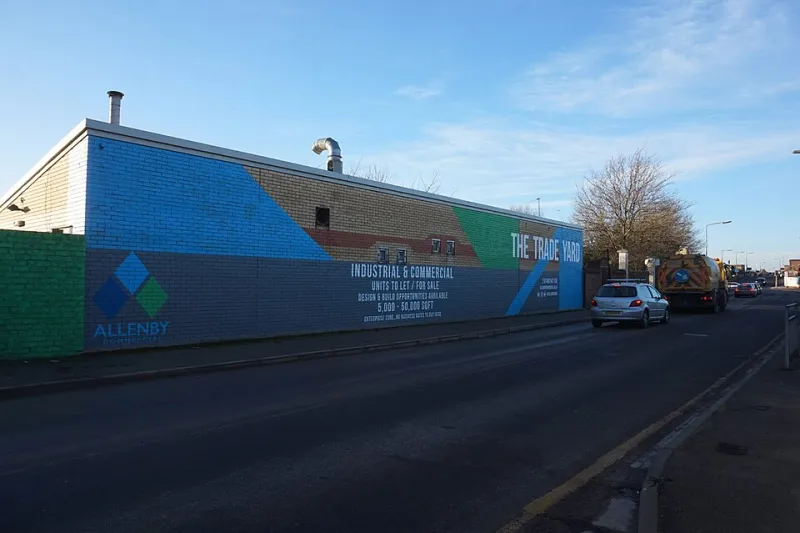
Photo: Ian S , CC BY-SA 2.0, via Wikimedia Commons
A delivery price on a quote is usually based on assumptions. The supplier assumes the vehicle can reach the gate, the gate can accept the vehicle, and somebody on site can unload it. When those assumptions are wrong, the delivery either fails or arrives with a surcharge. For UK trade buyers in 2026, access information belongs on the purchase order, not in a phone call that nobody records.
Where the quote stops and the site starts
A haulier prices a delivery on the information available at the time. If the site has a narrow lane, a low bridge, a weight restriction or no forklift, the haulier may not know until the vehicle is already on the road. The result is a failed attempt, a redelivery charge or a manual handling surcharge that was never in the budget.
The buyer's job is to close that gap before the order is placed. The delivery address is not enough. The access conditions are part of the order.
Tail-lift and forklift are two different questions
A tail-lift vehicle can lower a pallet to ground level. It cannot move the pallet to the final storage position. If the site has no forklift, the delivery may need to be kerbside or the driver may need to move the pallet with a pallet truck. Drivers are not obliged to unload beyond the tail-lift, and waiting time may be charged.
Confirm whether the vehicle will have a tail-lift, whether a forklift will be available at the agreed time, and who will operate it. Check the weight and height of the pallet. A tail-lift has limits, and a forklift needs clear access to the pallet. If the site has a loading bay, confirm the bay height and the vehicle type it can accept.
Approach, parking and permits
Narrow lanes, residential streets, low trees, tight corners and weight restrictions can stop a rigid vehicle or an articulated lorry. If the site is in a city centre or a controlled parking zone, check whether a parking suspension or permit is needed. In London, consider congestion charging and the Ultra Low Emission Zone where relevant, but do not assume the rules are identical outside London.
Ask the supplier or haulier what vehicle type is planned. A 7.5-tonne rigid and an articulated lorry have different access needs. If the site can only accept a smaller vehicle, say so before the order is confirmed. It may change the delivery price, but it is better to know that than to pay a failed-attempt charge.
Basement drops, lifts and door widths
A basement delivery is not a normal pallet drop. Confirm the lift dimensions, the door widths, the turning space and the floor loading. A pallet that fits on a tail-lift may not fit through the door. A pallet truck may not fit in the lift. If the goods need to be broken down, agree who will do it and where.
For upper-floor deliveries, confirm whether there is a goods lift and whether it can take the pallet weight. Stairs are not a delivery route for a pallet. If the delivery is to a multi-occupancy building, confirm the loading bay booking and the building's goods-in procedure.
Booking slots and the goods-in contact
Timed booking slots are common in retail, distribution and managed estates. A delivery that arrives outside its slot may be turned away. Confirm the booking process, the slot length, the grace period and the contact number for the goods-in team.
Give the supplier a named contact and a backup number. A site telephone number that rings out at 7am is not a goods-in contact. Confirm the site opening hours and the last accepted delivery time. If the site closes at 4pm, a 3:30pm slot is not a full slot.
The checklist to attach to the purchase order
A short access checklist on the purchase order prevents most of these problems. It does not need to be complicated. It needs to be completed and attached before the order is sent.
- Delivery address, including the exact goods-in entrance and postcode.
- Vehicle type accepted: rigid, articulated, 7.5-tonne, van or other.
- Tail-lift required: yes or no.
- Forklift available on site: yes or no, with the operator's hours.
- Maximum pallet weight and height accepted.
- Access restrictions: narrow lane, low bridge, weight limit, residential street or parking permit.
- Booking slot required: yes or no, with the booking contact and slot length.
- Goods-in contact name and telephone number.
- Basement or upper-floor delivery: lift dimensions, door widths and floor loading.
- Site opening hours and last delivery time.
- Any PPE or site induction requirement for the driver.
Attach the checklist to the purchase order and send it with the order. Ask the supplier to confirm that the access details have been passed to the haulier. If the delivery is urgent, confirm the vehicle type and the booking slot by email rather than relying on the order notes.
The delivery price on the quote should be the delivery price on the invoice. That only happens when the access information is as clear as the product code. A five-minute checklist is cheaper than a failed wagon and a redelivery charge.